 Bedrock
Bedrock is a liquid restaking protocol for minting uniBTC and uniETH
Bedrock is a crypto protocol that issues tradable receipts for deposited assets and reuses staked value to support additional blockchain services. This multi-asset liquid restaking model includes uniBTC and uniETH, keeping Bitcoin-linked collateral or Ether usable in decentralized finance while underlying positions are staked or restaked. Balances do not rebase; conversion value, reward accounting and redemption terms follow each token's backing, exchange rate and withdrawal path. The wider suite also includes brBTC and uniIOTX; this page follows the uniBTC and uniETH routes.
Minting turns wBTC and ETH into liquid receipts
The Bedrock minting flow converts supported collateral into a transferable receipt without closing the underlying staking position (more in Bedrock review ).
For uniBTC on Ethereum, the user connects an EVM wallet, approves wBTC spending and submits the mint. A fresh ERC-20 allowance therefore creates two state-changing transactions: one approval and one deposit. The vault receives the wrapped Bitcoin and the wallet receives uniBTC. On Ethereum, uniBTC uses 8 decimal places and targets a 1:1 mint relationship with supported wrapped Bitcoin collateral. Eight decimals divide one token into 100,000,000 base units, matching wBTC precision. More context is available in Bedrock essentials.
The uniETH path accepts native ETH on Ethereum Mainnet, so it does not need an ERC-20 approval before deposit. One mint transaction sends ETH to the staking contract and returns uniETH at the prevailing exchange ratio. uniETH uses 18 decimals; one ETH likewise contains 1,000,000,000,000,000,000 wei. The receipt balance stays transferable while pooled ETH is assigned to validators and restaked through EigenLayer infrastructure.
Minting preserves liquidity at the token layer, not at the underlying validator layer. A holder exits through Bedrock's redemption process or sells the receipt into a compatible market. These routes produce different timing, fees and execution prices. The native ETH route begins with one on-chain mint.
Lido, Rocket Pool and Lombard separate the alternative paths
Competing liquid staking tokens differ mainly by collateral type, reward source and their balance accounting method.
Lido's stETH rebases, while wstETH wraps it into a non-rebasing Ethereum staking token; neither automatically adds an actively validated service reward path. Rocket Pool's rETH also uses non-rebasing accounting and draws staking performance from permissionless node operators. The weETH token wraps eETH and packages native Ethereum restaking into a transferable token. For Bitcoin exposure, Lombard's LBTC is built around Bitcoin staking through Babylon, while direct Babylon staking keeps the original asset on Bitcoin rather than beginning with wBTC on Ethereum.
Within Bedrock, BTC-linked and ETH-linked receipts share one protocol family. That convenience also concentrates interface, contract-upgrade and operator exposure. The alternative with the most direct chain relationship is solo Ethereum staking, which requires 32 ETH plus an execution client, consensus client and validator client. Users prioritizing secondary liquidity compare actual pool depth for uniETH, wstETH, rETH and weETH before choosing a receipt.
Non-rebasing balances move value through exchange rates
A non-rebasing Bedrock balance stays numerically stable while the asset claim changes through a conversion ratio.
With uniETH, the wallet quantity stays unchanged as net staking rewards enter pooled reserves. The exchange ratio states the ETH claim for each unit, so accounting systems must track both token balance and ratio. Validator rewards push the ratio upward after fees; validator penalties, restaking penalties and accounting losses move it the other way. A secondary-market price can still sit above or below the redemption value because traders price liquidity and waiting time.
Ethereum activates a validator with 32 ETH and organizes time into 12-second slots and 32-slot epochs. One epoch lasts 384 seconds, or 6.4 minutes. Under normal network participation, finality follows two epochs, meaning 64 slots or about 12.8 minutes. Those consensus intervals explain transaction settlement, but they do not predict a liquid staking withdrawal queue.
uniBTC follows a different accounting anchor. The core mint relationship targets one unit of uniBTC for one unit of accepted wrapped Bitcoin, while reward programs or restaking economics sit alongside that backing. It should not be assumed each uniBTC unit rises against wBTC in the same way uniETH rises against ETH. The 8-decimal token format also differs from uniETH's 18-decimal format.
Rewards come from validators, restaking and DeFi use
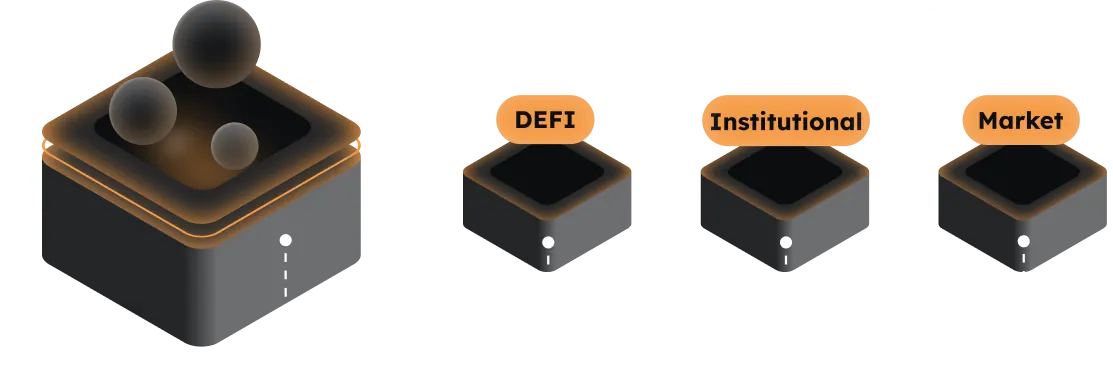
The Bedrock reward stack combines base-chain staking economics, restaking incentives and optional DeFi income from receipt tokens.
For uniETH, Ethereum validator revenue includes consensus rewards, block proposal income and execution-layer priority fees. EigenLayer adds a second layer by allowing staked ETH to support actively validated services under commitments. A third layer arises when a holder places uniETH in another protocol, such as a liquidity pool, introducing separate contract rules, swap fees and price exposure. uniBTC separates 1:1 collateral backing from incentive accounting. Bedrock's point formula has treated 1 restaked ETH held for 1 hour as 1 point, a time-weighted unit rather than cash yield. APY still moves with performance, fees and participating stake. The durable accounting unit is 1 ETH-hour.
A wallet, the right chain and gas complete entry
Entering Bedrock requires supported collateral, a self-controlled wallet, the correct network and enough native gas.
Ethereum Mainnet uses chain ID 1. Its account and contract addresses are 20 bytes, displayed as 40 hexadecimal characters after the 0x prefix and 42 characters in total. The prefix is not part of the underlying 20 bytes. Contract identity matters because the same symbol can exist at another address or on another chain. Native ETH needs no ERC-20 allowance, while wBTC does. The transaction form supplies the applicable deposit limit, conversion ratio and fee before signing.
Use this Bedrock decision checklist before approving the first transaction.
- Choose uniETH only when the wallet holds native ETH on Ethereum Mainnet.
- Choose uniBTC only when the selected network accepts the exact wrapped Bitcoin asset.
- Keep ETH for gas before depositing the spendable balance.
- Read the displayed exchange ratio, fee and minimum before signing.
- Limit an ERC-20 allowance to the intended deposit when repeat mints are unlikely.
A native ETH mint normally needs one state-changing transaction. A new wBTC allowance and mint need two. After confirmation, add the verified token contract if the wallet does not display the receipt automatically. Use the transaction receipt to confirm chain ID 1 and the exact token contract.
Redemptions follow queues instead of instant settlement
Bedrock redemptions settle through protocol queues, while secondary-market sales settle against available pool liquidity.
uniETH redemption starts by approving the receipt, submitting a withdrawal request and returning later to claim released ETH. With no existing allowance, that sequence requires at least three state-changing transactions: approval, request and claim. The underlying validator exit is organized around Ethereum validator balances, traditionally 32 ETH for a legacy validator. Network exit demand and EigenLayer processing then influence elapsed time. A wallet's first transaction confirms in minutes, yet that confirmation only records the request; it does not release the underlying ETH.
A market sale avoids validator processing by exchanging uniETH for ETH or uniBTC for wrapped Bitcoin through existing liquidity. A fresh approval plus the swap creates two state changes. The amount received reflects reserves, swap fee, route and trade size. uniBTC redemption adds the wrapped asset's custody and release path; operational minimums, fees and daily caps are adjustable. Read the transaction values at signing time. The burned uniBTC amount retains 8-decimal precision.
Reserve checks, contract roles and price gaps define the edge cases
From a timing perspective, Bedrock's edge cases begin where reserve data, upgradeable contracts and market prices stop moving in perfect alignment.
For uniBTC, Chainlink Proof of Reserve supplies an on-chain reserve value and Secure Mint checks proposed supply against it. Minting reverts when the post-mint supply would exceed verified reserves. That rule protects the 1:1 collateral constraint at issuance, but it does not set a secondary-market price or guarantee immediate redemption. wBTC itself has a separate custody structure, so uniBTC inherits both the wrapped asset's assumptions and Bedrock's vault logic.
uniETH combines validator operation, EigenLayer delegation, exchange-rate accounting and upgradeable contracts. A loss at any layer can reduce the ETH claim per token while the balance stays unchanged. Restaking adds service-level penalty conditions. Before treating the receipt as collateral-equivalent, compare four values: protocol conversion ratio, quoted price, redemption fee and expected queue. Pair uniBTC supply with reserve data and uniETH supply with its ETH reserve. That distinction remains visible in uniETH's 18-decimal balance and changing ETH ratio.
Quick answers
Which self-custody wallets can display Bedrock tokens?
Any EVM wallet that supports custom ERC-20 tokens can hold uniBTC and uniETH on Ethereum. MetaMask, Rabby, Ledger and Trezor setups are common examples, although a hardware device signs through a compatible wallet interface. A missing balance normally means the wallet has not indexed the token contract on the selected chain. Adding the verified contract address changes the display only; it does not move the tokens.
Does transferring uniETH reset its accumulated staking value?
Transferring uniETH does not reset the exchange-rate value already embedded in each token. The recipient receives the same ERC-20 units, and every unit references the same protocol conversion ratio at that moment. Address-based campaign points are different from token value, so their treatment follows separate program rules. A transfer also requires ETH for gas on Ethereum, and the recipient may need to add the token contract for display.
What happens if a Bedrock transaction remains pending?
A pending Bedrock transaction has not yet entered the chain state, so no mint or redemption state change is final. Check the wallet nonce, selected network, gas ceiling and transaction status in a block explorer. An Ethereum transaction with the same nonce and a higher fee can replace the pending one. Do not submit a second mint with a new nonce until the first transaction's outcome is clear.
Should uniBTC be sent to a Bitcoin address?
uniBTC should be sent to an address on the chain where its token contract is deployed, not to a native Bitcoin address. On Ethereum and other EVM networks, the destination is a 20-byte EVM address. The wrapped Bitcoin backing remains separate from token transfer mechanics. A cross-chain move requires a supported bridge route; a normal ERC-20 transfer does not change networks.
When does a Bedrock token approval expire?
An ERC-20 approval remains available until its amount is spent, replaced or reduced by another transaction; it does not expire on a clock. Bedrock's mint contract can draw only within the allowance recorded for that contract and token. An exact-amount approval limits the authorization to the intended deposit, while a larger approval avoids a new approval transaction for a later mint.
Are Bedrock receipts usable as collateral in lending markets?
Bedrock receipts function as collateral only where a lending market has explicitly listed the token and configured parameters for it. ERC-20 compatibility alone does not create a market. A listing specifies the accepted contract, network, loan-to-value settings and liquidation rules. Supplying uniBTC or uniETH to a supported market adds oracle, liquidity and liquidation exposure beyond Bedrock itself.
What records belong in a Bedrock transaction log?
A useful Bedrock transaction log records the chain, wallet address, transaction hash, token amount, exchange ratio, gas paid and time of each mint, transfer, swap or redemption. Keep approval and claim transactions as separate entries because they have different on-chain effects. For token-to-token swaps, record both assets and the actual received amount. These records support reconciliation when wallet history, protocol dashboards and accounting software group events differently.